
Ten days. One real book. A child who can explain what they read — and write it down.
One carefully chosen novel per year level, read closely and written about every single day, with three to six children and a qualified teacher.
28 Sept – 9 Oct
1 hour a day
3–6 students
Year 1–6
How every lesson runs
- The teacher reads aloud, and thinks aloud. Children almost never get to hear an expert reader think.
- The class digs in together. With three to six children, nobody hides at the back.
- Your child writes, every lesson. Shared Writing — the teacher builds the piece alongside them rather than handing over a template. Their ideas stay theirs; the vocabulary and sentence structure get lifted.
- Work comes back with real feedback, and gets revised. Submitted through Showbie, marked in detail, rewritten. A grade tells a child where they stand. Feedback tells them what to do next.
What your child actually writes
Every lesson ends in writing. Not a worksheet — a real piece, growing across the two weeks.
| Year | Writing focus | Finishes with |
|---|---|---|
| 1 & 2 | Sentences that hold a whole idea; capital letters, full stops, joining words | Their own fable |
| 2 & 3 | Describing a character, and saying why someone did something | A short story from a new point of view |
| 3 & 4 | Turning what you notice into evidence; paragraphing | A scene written from a wordless page |
| 4 & 5 | Atmosphere, precise vocabulary, varying sentence length | A descriptive piece in the author’s style |
| 5 & 6 | Planning, structure, holding an argument together | An extended response under time |
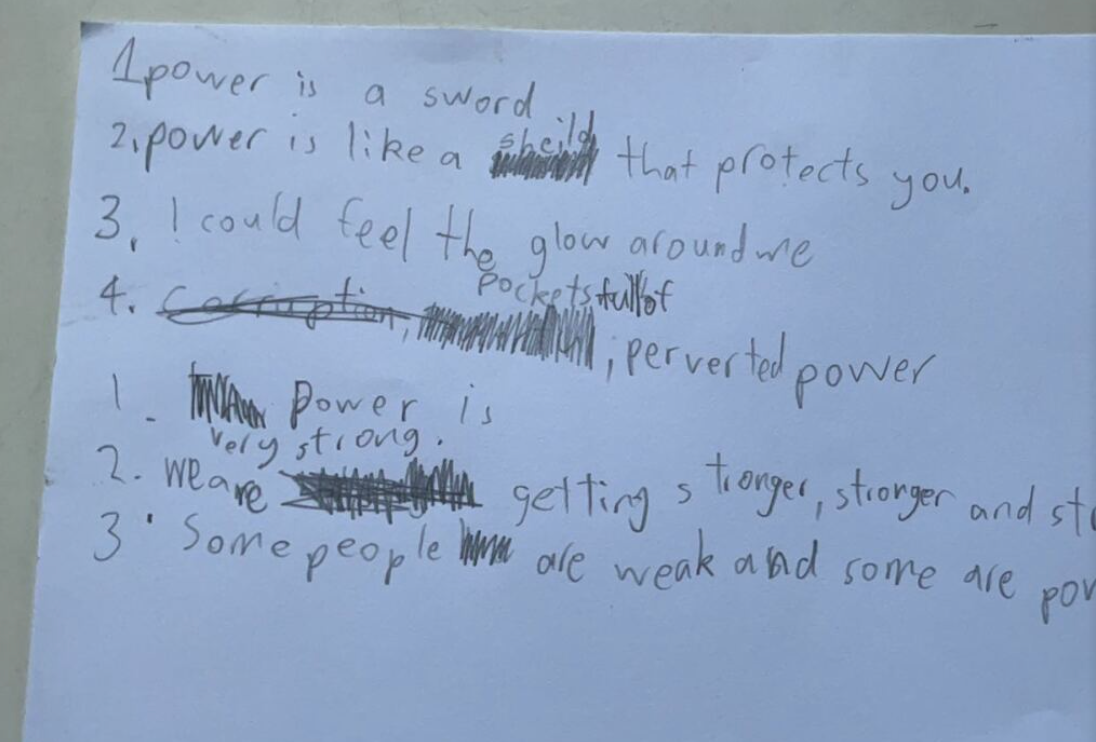
From “I don’t know what to write” to this
Real work by real Mica students, and their parents in their own words. Shared with each family’s written permission, first names only.
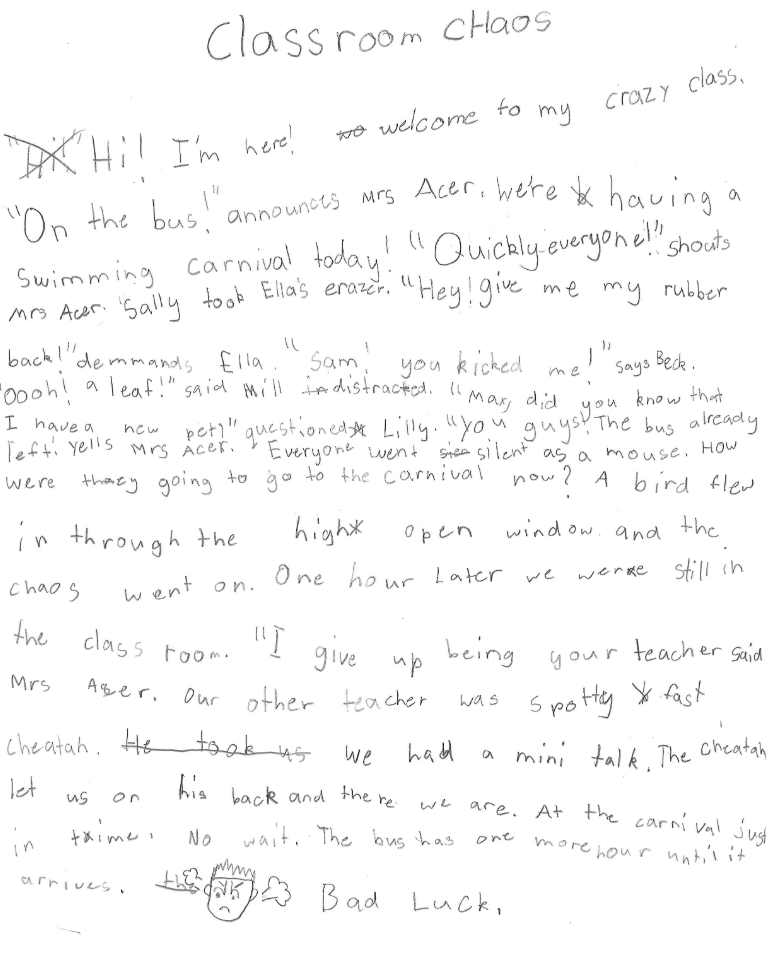
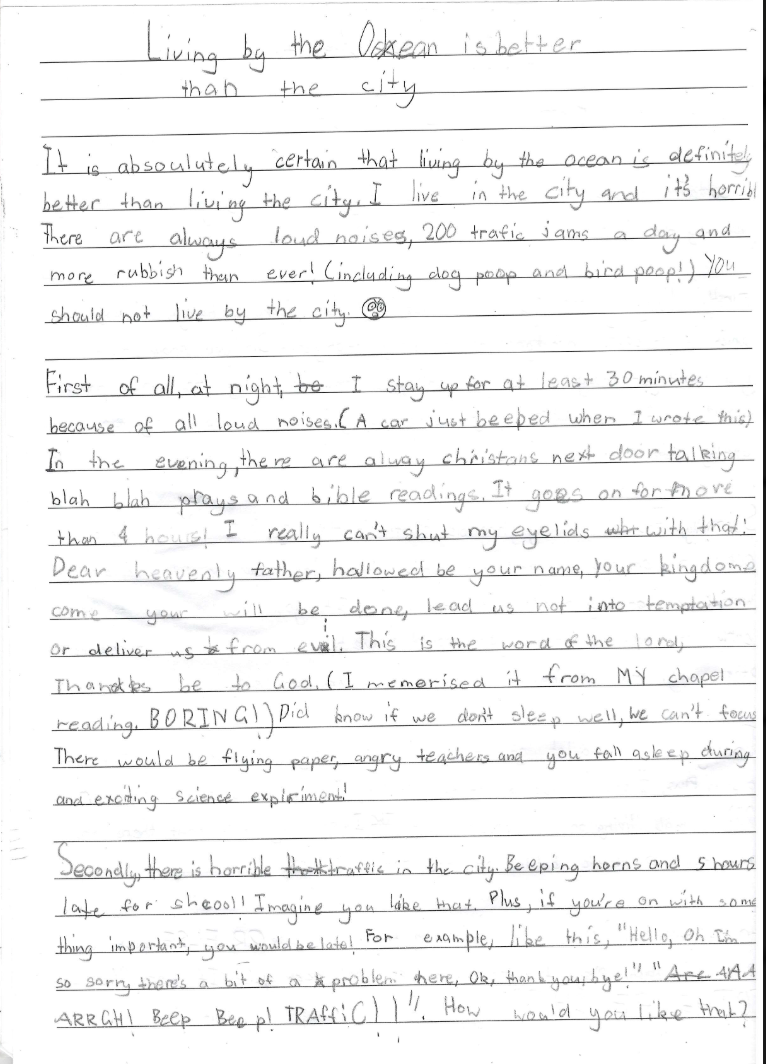
“My child can read really well, but he lacked writing skills. I was very pleased to see that he is now able to write longer, and is more willing to write. I am so grateful that I signed him up.”
— [ FIRST NAME ], parent of a Year 3 student
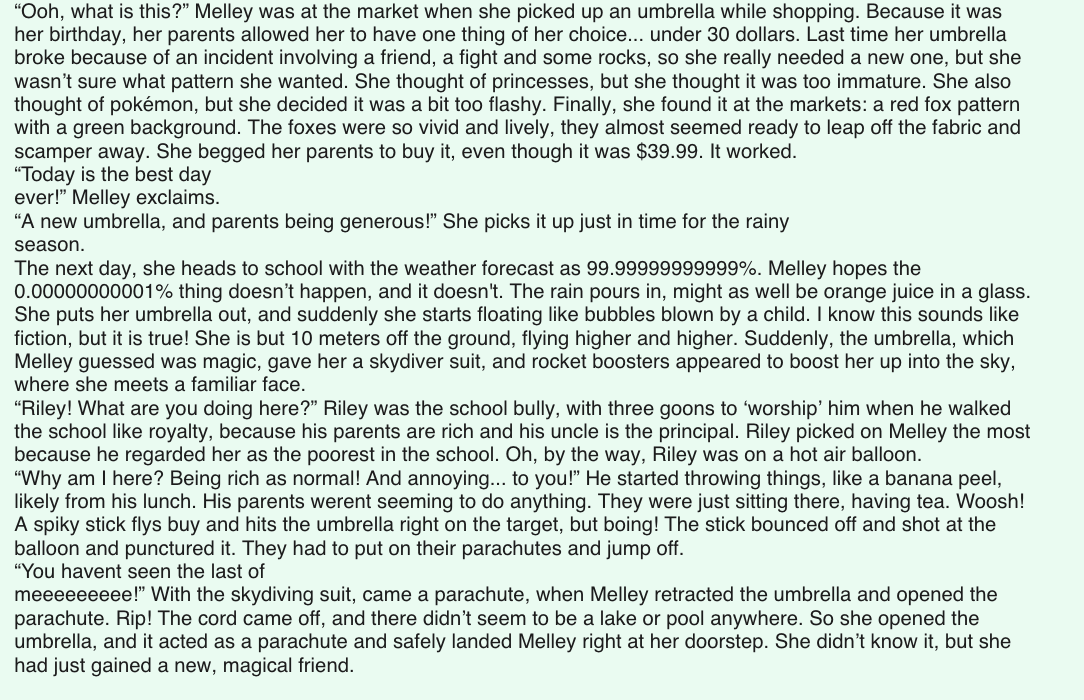
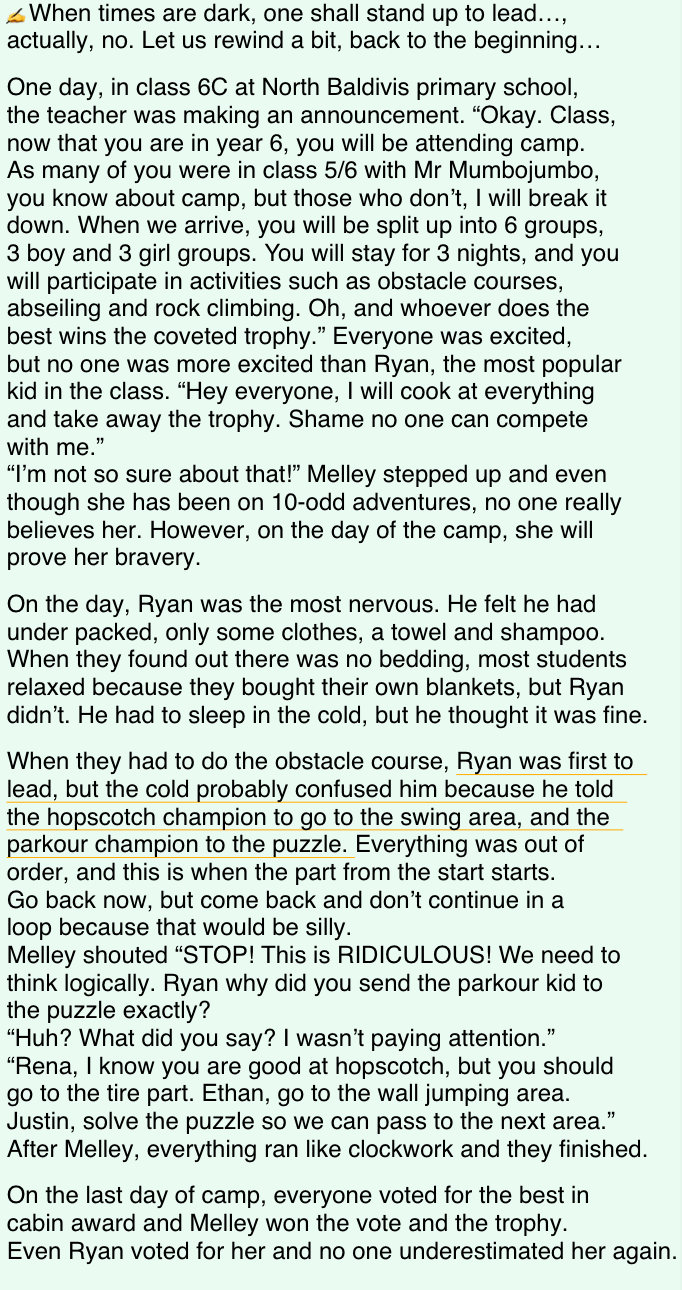
“I signed up for the holiday program just because I didn’t want my child playing too many video games. I didn’t think ten lessons would build his confidence in writing. He now loves to write.”
— [ FIRST NAME ], parent of a Year 5 student
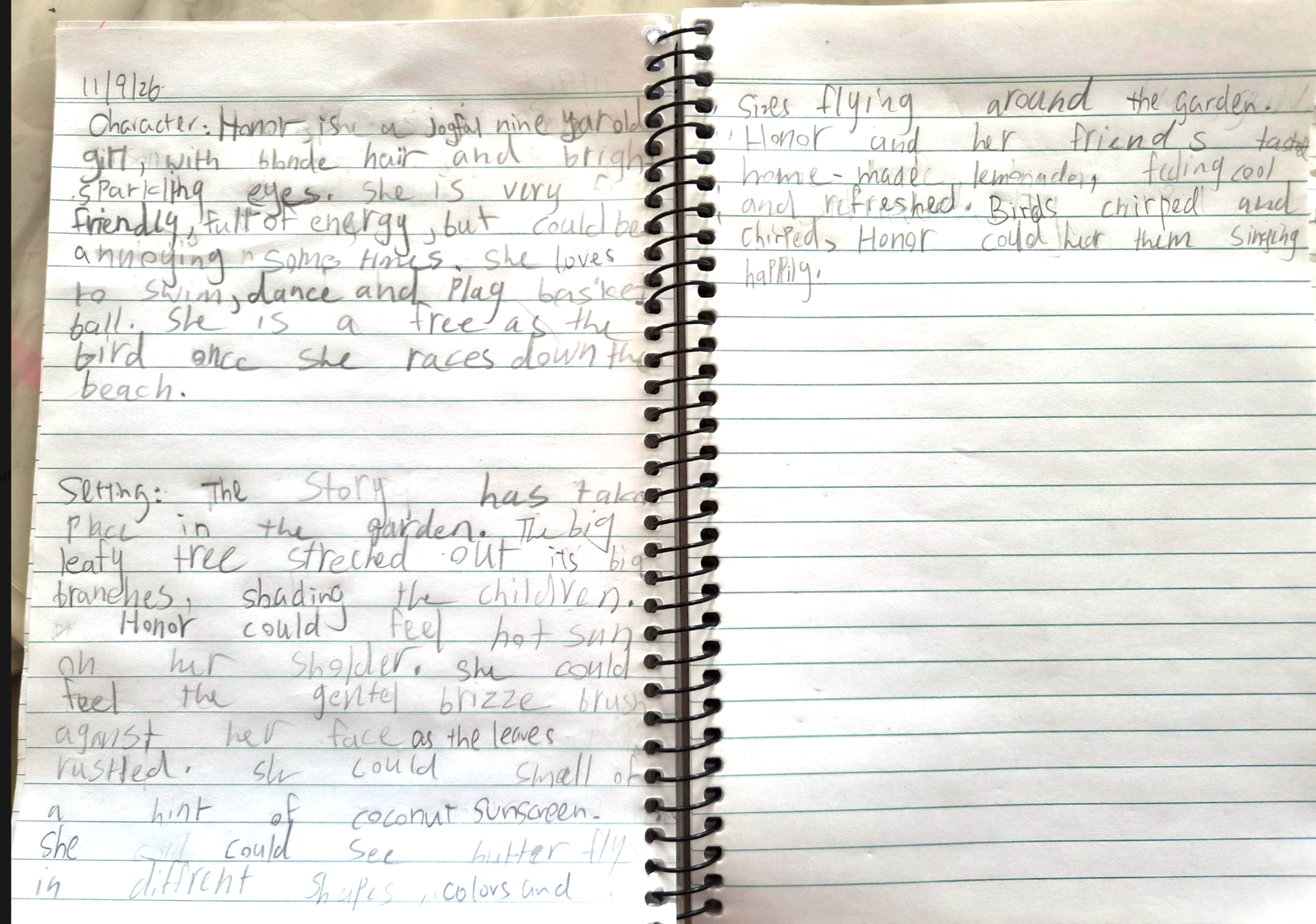
“My child came to Australia a year ago. I always worried about whether he was catching up with the others in English. We have stayed with Mica for a third year now. He has not only caught up with his peers, he is ahead.”
— [ FIRST NAME ], parent of a Year 2 student
None of these children became the best writer in their class in a fortnight. That isn’t what happened, and we won’t pretend it is. What changed is that they stopped being frightened of a blank page.
Not sure which level? The bands overlap on purpose. Book a free assessment and we’ll tell you honestly which class fits — about twenty minutes, no obligation.
The quiet head start on selective and scholarship tests
This isn’t exam preparation. There are no practice papers and no mock tests. But it builds the thing those papers actually measure.
A selective or scholarship reading paper hands a child an unfamiliar text under time pressure and asks them to work out what it means. The writing task gives them a prompt and roughly twenty-five minutes. Neither rewards memorised content — they test whether a child can think on unfamiliar ground and get that thinking onto paper quickly.
That capacity is built over years of reading hard things closely and writing about them. It cannot be crammed in Year 5, which is when most families start.
So the honest version: two weeks won’t prepare anyone for a test. But a Year 3 child who spends this fortnight explaining a difficult book and writing about it is laying the foundation that Year 6 preparation later stands on — and arrives at it with far less to fix.
Choose your child’s class
Five levels, five books. Six places per class. Full details and booking below.
If you are in Sydney, Melbourne or Brisbane, check the times twice. The eastern states move to daylight saving on Sunday 4 October, partway through the program. From Monday 5 October every class shifts one hour later on your clock. Perth does not change. The times shown above are the ones to go by — but set a reminder for that Monday.
Still deciding? Watch a whole lesson first
Five minutes, start to finish. Homework feedback, reading the chapter, building the writing, and the homework that goes out at the end. Nothing staged and nothing cut out.